



Clifford: Turning trees in to usable lumber
By Andrew Clifford for West Carleton Online
Many homeowners face the difficult decision of removing a tree from their property due to safety concerns, storm damage or construction.

What many don’t realize is that instead of letting that tree go to waste, it can be salvaged and turned in to beautiful, usable lumber. If you’re removing a tree that holds sentimental value, repurposing it into furniture or keepsakes is a meaningful way to preserve its legacy.
Urban trees, even those from residential properties, can yield high-quality wood. Species like maple, oak, walnut, and ash are commonly found in neighborhoods and produce excellent lumber for a variety of uses. Many people assume once a tree is removed, it’s only good for firewood or mulch, but in reality, it can be transformed into custom furniture, shelving, countertops, or even flooring.
By salvaging and repurposing wood, homeowners not only keep a part of their tree but also contribute to sustainable practices by reducing waste and minimizing the environmental impact of unnecessary tree disposal.
Salvaging urban logs is a straightforward process when handled by professionals.
Here’s how it works:
- Tree Removal and Log Salvage – When a tree is removed, we assess whether the logs are suitable for milling. Straight sections clear of bends and cavities are ideal. Instead of discarding them, we transport them for processing.
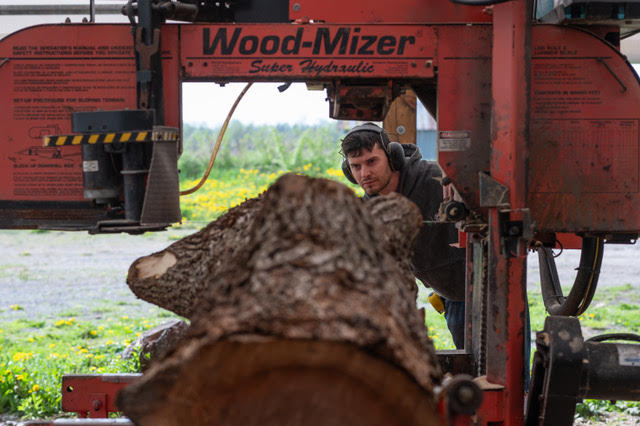
- Custom Milling – Logs are cut into slabs or dimensional lumber according to customer preferences and intended use.
- Air Drying – After milling, the wood must air dry for six to 12 months, depending on thickness, to reduce moisture content before kiln drying.
- Kiln Drying – Once sufficiently air-dried, the wood is placed in a kiln to further stabilize it, preventing warping and moisture issues. This process also eliminates any insects living in the wood, ensuring the final product is clean and pest-free. Kiln drying then ensures stability and longevity by preventing warping and moisture issues.
- Final Use – Once milled and dried, the wood is ready to be used for custom projects, preserving the beauty and history of the tree.
Choosing to repurpose urban logs supports eco-friendly practices by reducing landfill waste and decreasing the demand for newly harvested lumber. Instead of sending valuable wood to a disposal site, it can be crafted into functional and decorative pieces, ensuring it continues to be appreciated for years to come.
If you’re planning a tree removal, consider salvaging your logs instead of discarding them. Our team can assist with transporting, milling, and drying the wood to your specifications. Once the lumber is ready, it’s up to you to decide how to use it, whether for furniture, décor, or keepsakes.
Contact us today to learn more about urban log salvage and custom milling services. Let’s work together to preserve your tree’s story.
Andrew Clifford has worked in the tree care industry since 2011 and completed the Urban Arboriculture program at Humber College. He founded Capital Timber Company in 2013. Based in Kinburn, the company provides Ottawa and the Valley with professional tree care services.
To view all Clifford’s columns, click here.
For more information, you can visit Capital Timer’s website here.