



MMLT film prescribes nature as cure-all
By Nonie Smart - West Carleton Online
PERTH – Earlier this month (Feb. 1), the Mississippi Madawaska Land Trust (MMLT) released its latest film, Nature’s Path to Wellness, a testament to nature’s restorative power.
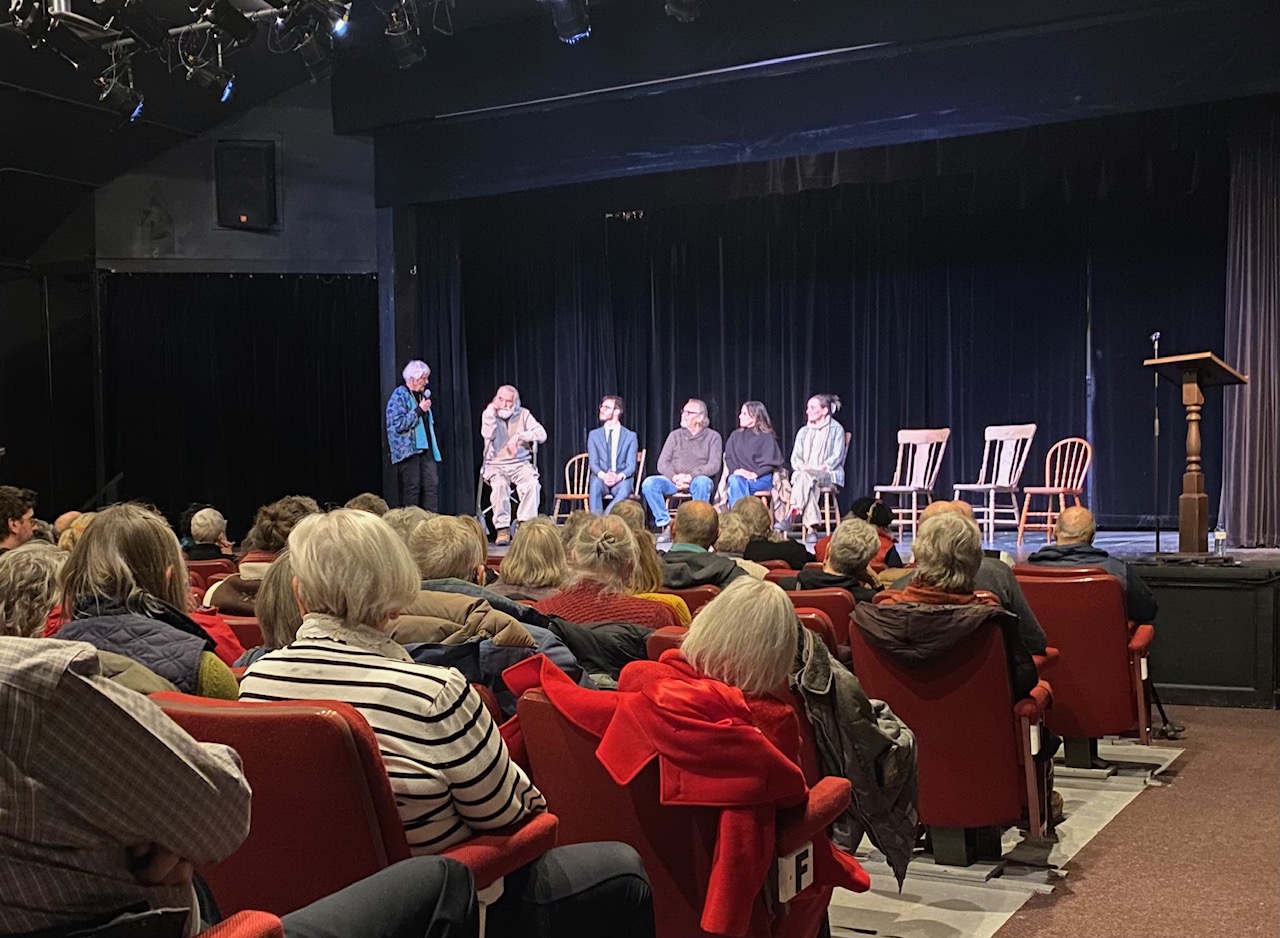
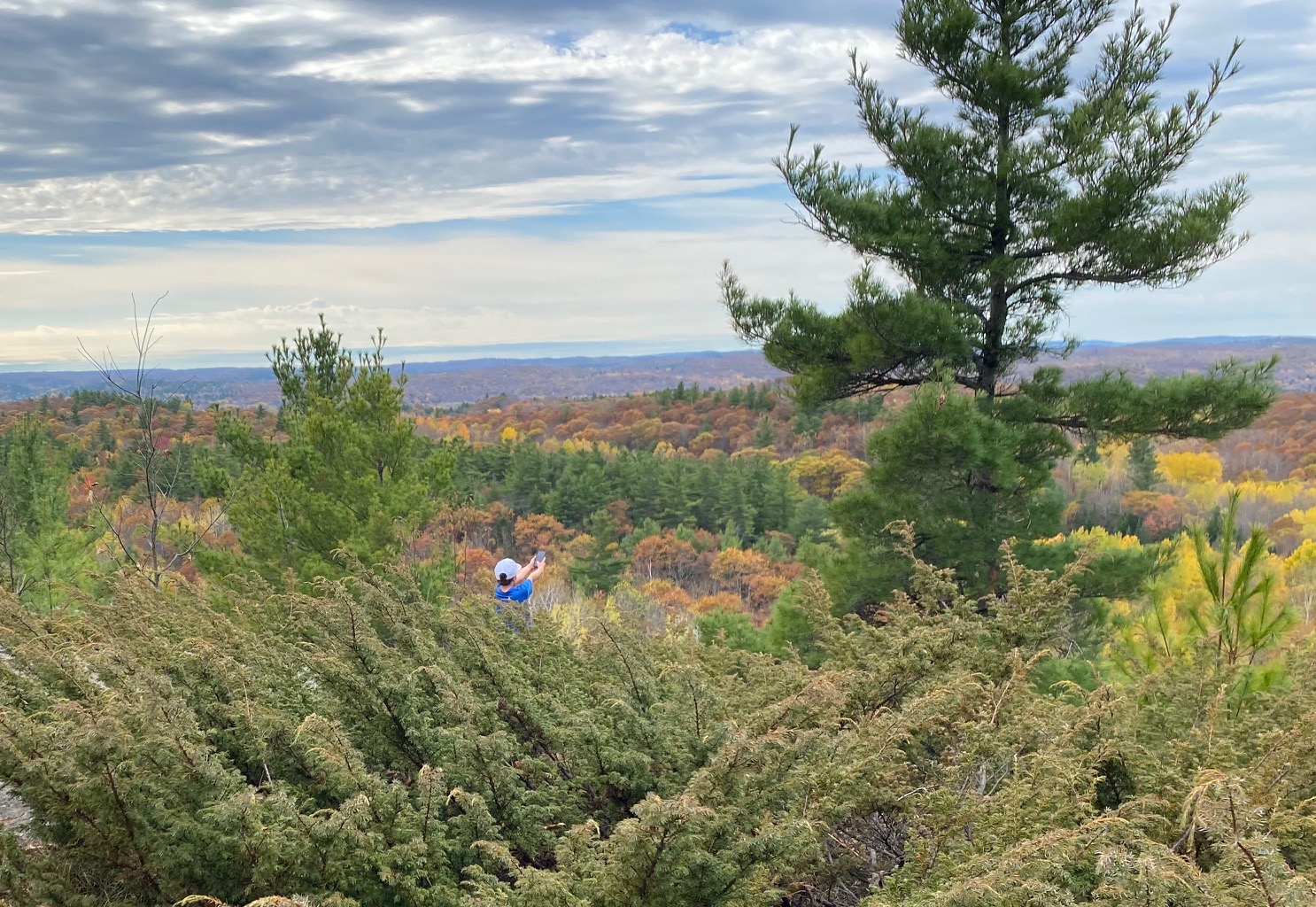
More than 200 attendees packed the Studio Theatre Perth for the inaugural screening of the 15-minute video – a gentle narrative featuring real life stories and stunning vistas of three MMLT properties including Blueberry Mountain at cliffLAND, High Lonesome Nature Reserve and the Poole Family Nature Sanctuary.
Following the screening, some MMLT members featured in the film spent a lively hour sharing their outdoor experiences with an enthusiastic audience including West Carleton Online.
The afternoon event began with a question posed by moderator Mary Vandenhoff, the film’s producer and also a founding MMLT member.
“Why would a land trust do a film on mental health?” she said. “It’s very simple because conservation has to do with the health of the planet. This involves the community of humans as well. It is all interdependent and connected.”
The MMLT has been working tirelessly since 2003 to bring people and nature together.
“The land trust was started with two initiatives,” MMLT board of directors President Steve Kotze said. “One was to conserve property for nature to take its course. The other mission was to engage people with nature and to foster that engagement. That is where the film comes in. It was done with the support of the Perth Community Foundation. We could not have done it without them.”
The film opened with naturopathic doctor Owen Wiseman taking the pulse of today’s society.
“Some of the most worrisome health challenges I find that are coming into the clinic nowadays are everything from heart disease to loneliness and the hectic busy lifestyles that are leading everyone to have chronic stress,” he said. “How do we actually support them is the biggest question.”
“There is no doubt there is an epidemic of emotional illness,” retired professional psychiatric social worker Howard Clifford added. “That is because so much of our life is so artificial. We see kids that are anxious and feeling lonely and depressed. People feel disjointed from nature. We have the illusion we are separate from nature.”
The antidote, according to those interviewed during the film, could be as close as your own backyard.
“The path to true wellness may actually be reconnecting to nature, this incredibly powerful medicine all around us, all the time,” Wiseman said. “There is so much science on how nature benefits the body.”
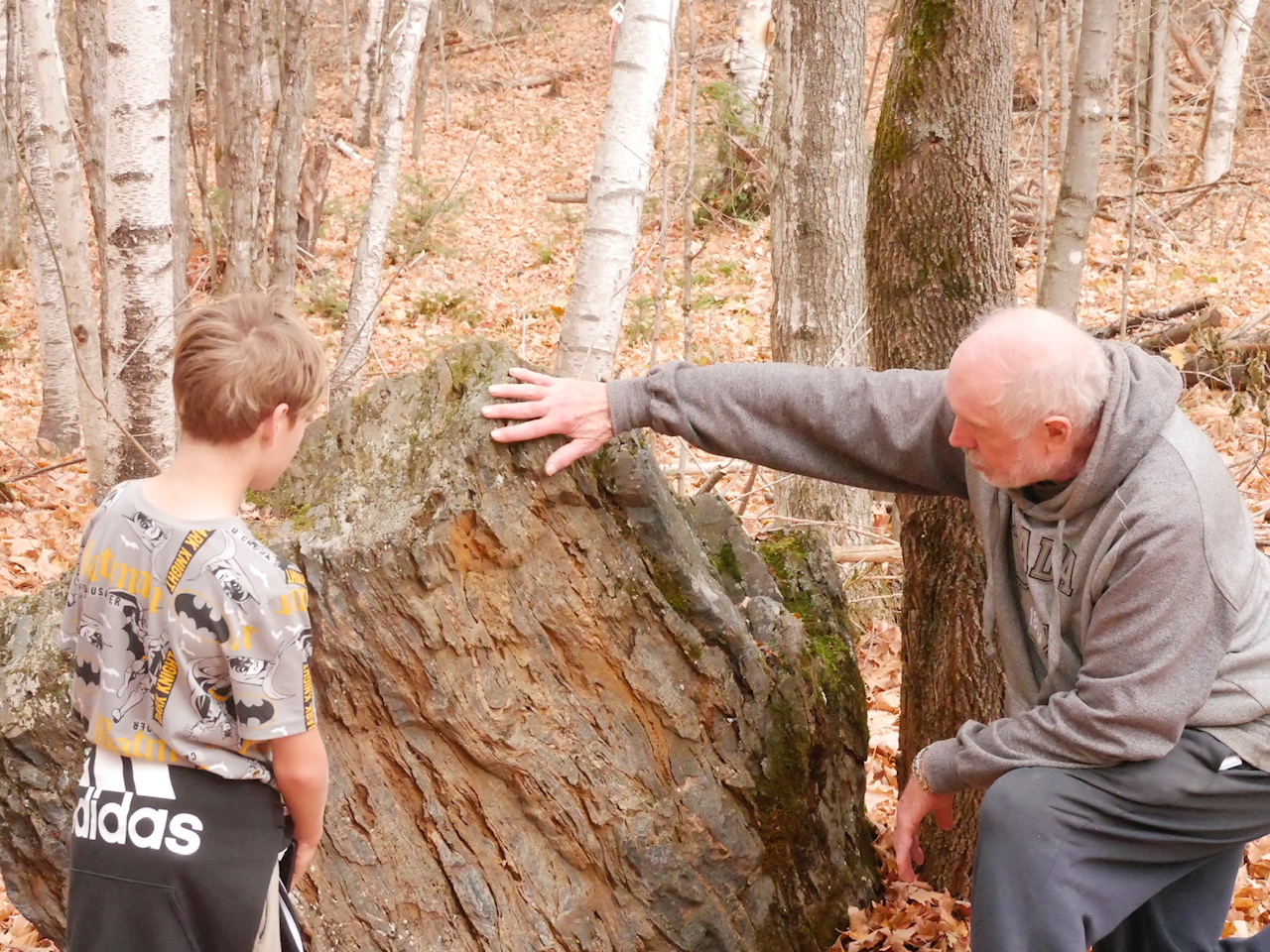
Throughout the film, interviewees encouraged people of all ages to reap the benefits of spending time in nature. As E.M. Forster once wrote, “What is the good of your stars and trees, your sunrise and the wind, if they do not enter into our daily lives?”
“When you throw kids into a wild environment, they get to have a blast,” Wiseman said. “You see the joy, the happiness, the relaxation. They actually do better in school. They can regulate their emotions better. And as one unknown author wrote, ‘the mud will wash off but the memories will last a lifetime.’”
Seniors who may feel isolated but are able to experience the beauty of nature may feel less alone Clifford says.
“But if you go out in to nature, and see the beauty of nature, the flowers, the wildlife, we find out that we are part of nature and nature is a part of us,” he said. “We cannot separate ourselves from it. We need to recapture that.”
Certified forest therapy guide Joanna Kowalczyk said when people learn to engage with nature through their senses, the experience can reduce anxiety, lift mood and facilitate wellness.
“Nature allows us to make sense of what is going on and to feel like you are in control,” she said. “It allows us to connect with our thoughts and emotions. When I am immersed in nature I feel at home. I am the guide the forest is the therapist.”
At the film’s conclusion, Wiseman opened the group discussion by sharing his philosophy of including nature in the treatment plans of his patients.
“We know, for example, that for people with diabetes, if we spend time in the woods, it can help bring down your blood sugar,” he said.
Clifford, landowner of Blueberry Mountain at cliffLAND, believes his patients always benefitted from getting outdoors.
“Back in the ‘70s I was working as a social worker in a psychiatric setting in Alberta,” he said. “I was offering therapy and sometimes we would go into the woods. It was a very beautiful area and you could just see the difference (in the patients) from being in the hospital and sitting around a table as compared to when we were out in the woods. You could just see their eyes open. They had been in the hospital for so long they had really lost contact with nature. I found that nature became the real teacher.”
Then a patient joined Clifford on a day long hike to find a lost canoe.
“I thought it might be more of a hindrance than a help but I took him along,” Clifford said. “In the afternoon we stopped and had a campfire. He looked at me and said, ‘this is the most beautiful day of my life.’”
When they found the canoe at day’s end, Howard climbed into a little rubber raft and handed the rope to his fellow hiker. He told him to hold on tight as the raft drifted over to the island where the errant canoe was lodged.
“He was pulling the rope back hard against the river current and I thought, I hope he is stronger than he looks,” Howard said. “Weeks afterwards my patient was still saying what a marvelous experience it had been to imagine the power of that river. I remember being so grateful that I had taken him because no matter what your skill level is, the wilderness is not judgmental, it meets you where you are.”
Retired indigenous rights activist and MMLT board member Micheal Desautels said immersing himself in nature has made him a better person.
“I have been a lifelong golfer,” he said. “But now I don’t care how well I golf because the true enjoyment comes from walking. There is activity in the farmers’ fields that draw my attention and there are spectacular groves of trees. I walk by the river, I see turtles, I see beavers swimming and each one of them I look at and see as a gift. When I feel blessed by these gifts I’ve received, it doesn’t just make me feel better, it makes me a better person because when I go out into the world after receiving this beauty I can’t help but look for ways I can pay it back.”
One senior audience member shared her fear of being cut off from nature when she is no longer able to walk.
“When you get to a point when going outside is not realistic, the science supports bringing nature indoors,” Wiseman said. “There is great benefit to bringing nature into your space. Touching a leaf; cleaning a plant; or watering a plant increases the blood flow and oxygen to your brain.”
Kowalczyk also suggested some ways nature could be experienced indoors.
“Engaging with textures and smells and looking at pictures of nature could also be really beneficial,” she said. “It works to connect the senses and open them up. When I did a session with seniors with some pine needles they started to talk about their memories from earlier days.”
Audience member Jackie shared her solo experience on High Lonesome Nature Reserve.
“A couple months before I retired, I had all these doubts and fears of retiring,” she said. “I wondered what would I do. I decided to go up to High Lonesome alone and stay in one spot for as long as I could. It ended being about eight-and-a-half hours. I preselected my site; I marked out a circle I could lay down in; walk around and sit in. I had no preconceptions about what would happen. I just wanted to get in touch with my thoughts. It was an amazing experience. Quite often they say you can get a message from nature and I got a really profound one for me by the end of the day.”
As the discussion wrapped up Clifford recalled how a woman nearing end of life asked him if she could participate in a group wilderness experience being offered at his property cliffLAND. Initially he was not in favour of the idea.
“What would happen if anything happened?” he said. “But she was insistent. ‘Put yourself in my situation,’ she said. ‘If you only had a few weeks to a few months to live and this is what you wanted to do, would you want somebody to tell you, you can’t do it?’ I didn’t have an answer to that so I said we will give it a try. It turned out to be the highlight of everyone’s experience.”
Clifford said he didn’t think she would be able to go to the top of Blueberry Mountain with the other hikers but he would drive her to the base so she could see where the group was going.
“She stared up the hill and looked from top to bottom,” he said. “She got back into the ATV and said, ‘Howard, I know this is crazy but I just think if I could get to the top of that I would not ask anything more from of nature.’”
They made it to the top by driving up an old creek bed that went around the back. Clifford said she was hanging on for dear life and her oxygen tank was bouncing around so much he feared it might explode.
“When we finally got to the top, she looked around, got down on her knees and was smelling the plants. I realized she was right in the moment, but I’d never seen so much power in it. I knew I was standing on sacred ground. There wasn’t yesterday, there wasn’t tomorrow, it was just now.”
The film Nature’s Path to Wellness is available online and the MMLT asks everyone to share it widely.